
Belgian Malinois recall training works when you use one cue, reward every return with something your dog loves, and build distance and distractions in small steps. Start indoors, then move to a 30-foot long line outdoors. Do not allow off-leash freedom in unfenced areas until your dog responds reliably.
A fast, high-drive dog can cover a large distance in seconds. That is why recall is a safety skill, not a trick. For the full foundation, see our guide on how to train a Belgian Malinois dog.
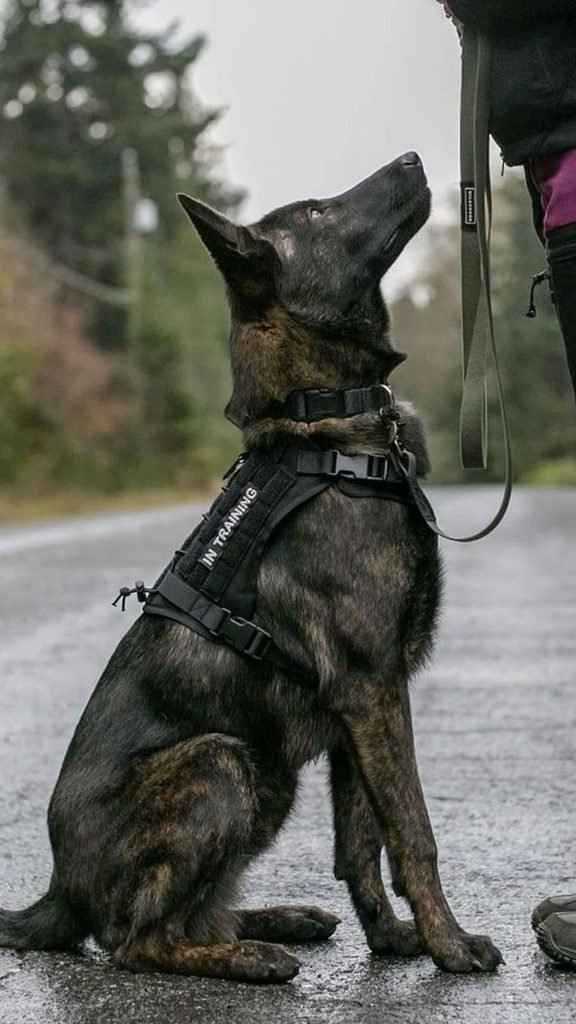
Why Is Recall Harder With a Belgian Malinois?
The Malinois was bred for work that rewards speed, focus on movement, and independence. Those traits help in police and sport work. They make recall harder at home.
Three things get in your way:
- Strong prey drive. Squirrels, bikes, and joggers can beat any treat.
- High arousal. An excited dog hears you less.
- Fast learning in both directions. Every failed recall teaches the dog that ignoring you works.
None of this means a Malinois cannot learn recall. It means you must build it deliberately and protect it.
What Do You Need Before You Start?
Gather this equipment first:
- A 30-foot long line. It gives freedom while keeping you in control.
- A flat collar or well-fitted harness. Attach the line to the harness for safety.
- High-value treats. Soft, small, and smelly works best.
- A favorite toy. Many Malinois work harder for play than for food.
- A treat pouch. Rewards must arrive within 1 to 2 seconds.
Do not use a retractable leash for recall work. It teaches the dog to pull and gives you little control.
Which Recall Cue Should You Use?
Pick one short word and keep it only for recall. “Come,” “here,” or a whistle all work.
Follow these rules:
- Do not use the dog’s name as the cue. You will use the name all day, and it loses meaning.
- Say the cue once. Repeating it teaches the dog to ignore the first request.
- Use a happy tone. The dog should expect something good, not a scolding.
- Agree on one word across the whole household.
How Do You Teach Recall Step by Step?
Move to the next stage only when your dog succeeds about 8 times out of 10. If it struggles, go back one stage.
Stage 1: Build the Association (Indoors)
- Stand 3 feet from your dog.
- Say the cue in a happy voice.
- When the dog reaches you, mark (“yes”) and reward.
- Repeat 10 times, then end the session.
Keep sessions to 3 to 5 minutes, several times a day.
Stage 2: Add Distance (Indoors and Yard)
Increase distance to 6 feet, then across the room, then to another room. Reward generously each time. Practice before meals, when the dog is motivated.
Stage 3: Move Outdoors on the Long Line
Start in a quiet, low-distraction area. Let the dog sniff, then call. If the dog does not respond, gently reel the line in and reward when it arrives. Do not shout or chase.
Stage 4: Add Mild Distractions
Practice near a quiet street, a park edge, or another calm person. Keep the line on. The goal is a dog that turns toward you even when something interesting is nearby.
Stage 5: Add Real Distractions
Practice around other dogs, children playing, or moving objects, still on the long line. Increase difficulty slowly and keep distance from the distraction at first.
How Do You Proof Recall Around Distractions?
Proofing means practicing in harder conditions until the skill holds. Use a simple ladder:
| Level | Setting | Rule |
|---|---|---|
| 1 | Quiet room | 8 of 10 successes |
| 2 | Yard | 8 of 10 successes |
| 3 | Quiet park, long line | Dog returns without line pressure |
| 4 | Park with mild distractions | Same rule |
| 5 | Around other dogs, still on line | Same rule |
Do not skip levels. A single failure in a high-distraction setting can cost you weeks of progress.
Which Games Build a Stronger Recall?
Games make recall fun, and a dog that enjoys coming returns faster.
- Restrained recall. A helper holds the dog while you walk away and call. Release the dog as you call, and reward with a toy.
- Round-robin recall. Two or three people call the dog in turn, and reward every return.
- Hide and seek. Hide in the house or yard, call once, and reward when the dog finds you.
- Tug on arrival. Turn the return into a short game of tug, with rules for start and drop.
Keep each game to a few minutes. End while the dog is still keen.
How Can You Use Prey Drive to Help Recall?
Prey drive is not the enemy. It can become your best reward.
- Use a toy as the payment. A quick tug game after the dog arrives is often more valuable than a treat.
- Build impulse control first. A dog that can wait for permission is easier to call away from a chase. See our program on impulse control and calmness.
- Use a flirt pole or tug. These give the dog a safe outlet for chasing, under your control.
- Add scent games. Nose work gives the dog a job and burns mental energy. See Scent Work and Nose Games.
What Is an Emergency Recall?
An emergency recall is a second cue used only for real danger, like a road or an unfamiliar dog.
To build it:
- Pick a different word or whistle from your normal cue.
- Pair it with the best reward you have, like chicken or a favorite toy.
- Practice a few times a week at low-distraction levels.
- Never use it for ordinary calls or to end the fun.
Treat it as insurance. Keep it rare and rewarding.
Why Does Recall Fall Apart During Adolescence?
Many dogs have a solid recall as puppies and lose it between roughly 6 and 18 months. This is normal for the breed.
During this period:
- Go back a stage. Return to shorter distances and the long line.
- Raise the reward. Use better treats or more play.
- Keep the line on. Do not test the dog off leash.
- Stay consistent. Do not punish a late return.
Adolescence is temporary, and the skills come back with steady practice. For an age-by-age roadmap, see our life-stage training guide.
What Mistakes Ruin Belgian Malinois Recall Training?
- Calling the dog to end the fun. The dog learns that “come” means the game stops.
- Scolding on arrival. Even a late dog should be rewarded for arriving.
- Repeating the cue. “Come, come, COME” teaches the dog to wait for the third call.
- Skipping the long line. Off-leash freedom too soon wipes out your progress.
- Practicing only when it is hard. Mix in easy, rewarded recalls throughout the day.
- Chasing the dog. Running after a Malinois turns it into a game. Run away instead and invite the dog to chase you.
When Should You Get Professional Help?
Ask a trainer for help if you see:
- A dog that ignores recall even at low distraction levels
- Chasing that you cannot interrupt, especially near roads or animals
- Fear, aggression, or guarding when you approach the dog
- You are a first-time owner of a high-drive working breed
Choose a trainer experienced with working breeds who uses positive reinforcement. If behavior is escalating, see our page on Malinois aggression solutions.
What Should You Read or Do After Recall Is Reliable?
Once your dog returns reliably on a long line, you can work on proofing it for real-life situations. For that stage, Advanced Obedience and Off-Leash Reliability is a logical next resource.
If you want a day-by-day schedule that includes recall, use our 30-day Belgian Malinois training plan.
Final Thoughts on Belgian Malinois Recall Training
Belgian Malinois recall training comes down to four habits: one clear cue, generous rewards, a long line, and gradual distractions. Protect the skill by never calling your dog for something unpleasant, and keep practicing through adolescence.
For the complete method, from socialization to impulse control, continue with our guide on how to train a Belgian Malinois dog.
Disclosure: this article contains affiliate links. We may earn a commission at no extra cost to you.
FAQ: Belgian Malinois Recall Training
At what age should you start recall training a Belgian Malinois?
At 8 weeks, indoors, with short games and rewards. Move outdoors on a long line once the puppy is vaccinated.
How long does it take to train a Belgian Malinois to come when called?
Basic recall often takes several weeks. Reliable recall around distractions typically takes months of ongoing practice, including through adolescence.
Why does my Belgian Malinois ignore me outside?
Distractions, high arousal, and prey drive overpower weak training. Go back to easier settings, use the long line, and raise the reward.
Can a Belgian Malinois ever be trusted off leash?
Some can, after extensive training, but many handlers keep a long line for months or longer. Never allow off-leash freedom in unfenced areas until recall is reliable.
What is the best reward for Malinois recall?
Whatever your dog values most, often a toy or small, soft, smelly treats. Keep the best reward for emergency recall.
Should I punish my Malinois for not coming?
No. Punishing a dog that arrives late teaches it to avoid you. Reward the arrival, then work on easier practice.