
Belgian Malinois leash training works when you reward the dog for staying beside you and stop moving the moment the leash goes tight. The dog learns that pulling gets it nowhere, and walking calmly moves you both forward. Use a 6-foot leash, high-value treats, and short sessions in low-distraction places first.
A Malinois is fast, strong, and easily excited by movement. Pulling is the default, not a sign of a bad dog. For the wider foundation, see our guide on how to train a Belgian Malinois dog.
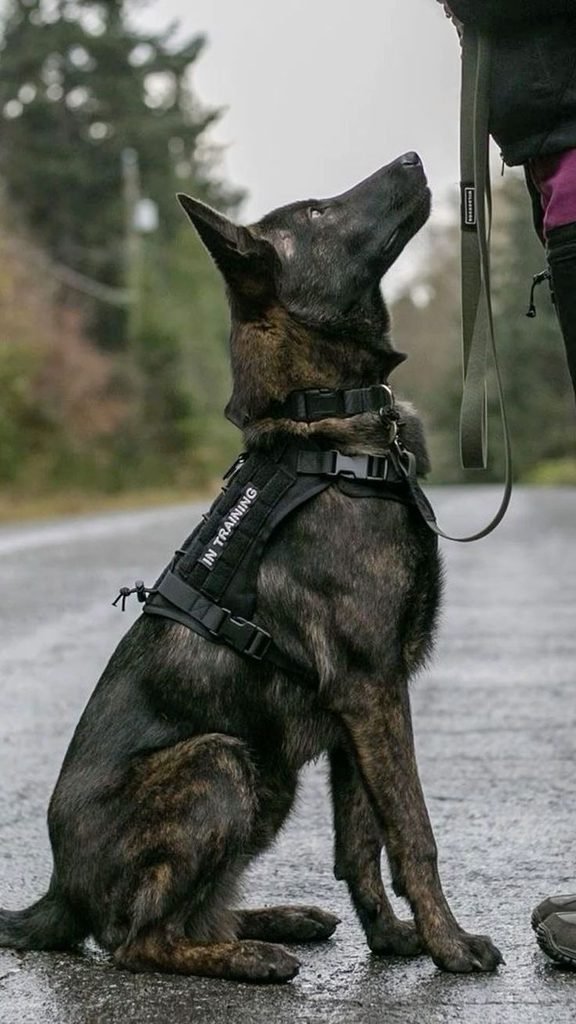
Why Does a Belgian Malinois Pull on the Leash?
Pulling has simple causes. Understanding them helps you fix the habit instead of fighting it.
- Speed. The Malinois moves faster than you walk, so the leash tightens by default.
- Excitement. Smells, sounds, and movement raise arousal, and an excited dog pulls toward them.
- It works. Every time pulling gets the dog to the tree or the other dog, the habit grows.
- Lack of training. Dogs do not know what a loose leash means until you teach it.
A dog that pulls is not stubborn. It is doing what has been rewarded.
What Equipment Do You Need for Leash Training?
Keep the setup simple.
- A 6-foot leash. Fixed length gives control and consistency.
- A flat collar or a well-fitted harness. Some owners prefer a front-clip harness for a strong puller. Check the fit with a trainer or vet.
- Small, soft treats. Pea-sized and easy to swallow.
- A treat pouch. Rewards must arrive within 1 to 2 seconds.
- A 30-foot long line. Use it for open spaces and sniff time.
Avoid retractable leashes, which teach the dog that pulling extends its range. Avoid tools designed to cause discomfort, because in a sensitive breed they can create fear or defensive behavior.
When Should You Start Leash Training a Belgian Malinois?
Start at 8 weeks, indoors, with short sessions. Early habits stick, and a puppy is easier to guide than a 70 lb adult.
| Age | Focus | Session length |
|---|---|---|
| 8 to 12 weeks | Accept collar or harness, walk beside you indoors | 3 to 5 min |
| 12 to 16 weeks | Loose leash in the yard, name and marker | 5 min |
| 4 to 6 months | Short outdoor walks, stop-and-go | 5 to 10 min |
| 6 to 18 months | Proofing around distractions | 10 to 15 min |
| Adults | Reset habits, then proof | 10 to 15 min |
An adult dog with a pulling habit can still learn. Expect to start with short sessions and a strong reward system.
How Do You Teach Loose-Leash Walking Step by Step?
Move to the next stage only when your dog succeeds about 8 times out of 10. If it struggles, go back one stage.
Step 1: Teach the Marker and the Position
- Say “yes” and give a treat. Repeat 10 times so the dog links the word with a reward.
- Stand with the dog at your side.
- Reward at your leg, so the dog learns that the good place is beside you.
Step 2: Walk Indoors
- Take 2 or 3 steps with the dog next to you.
- Mark and reward at your side.
- Increase to 5 steps, then 10.
Keep the leash relaxed and form a soft “J” shape between you and the dog.
Step 3: Stop When the Leash Goes Tight
This is the core rule.
- When the leash tightens, stop moving.
- Wait until the dog gives slack, by turning toward you or stepping back.
- Mark and reward at your side.
- Move forward again.
Do not yank or pull back. Your job is to be boring and consistent. Within a few sessions the dog starts to check in with you.
Step 4: Change Direction
If the dog is faster than you, turn the other way while saying a cheerful cue. When the dog catches up, mark and reward.
This teaches the dog to keep an eye on you, because you may go anywhere.
Step 5: Move Outside
Start in a quiet place such as your driveway. Keep sessions short and add distance slowly.
Use the same rules outside: stop when tight, reward when loose, and change direction if needed.
Step 6: Add Distractions Gradually
Practice near a quiet street, then a park edge, then around other people and dogs. Keep distance from the distraction at first, and move closer as the dog succeeds.
What Is the Difference Between Heel and Loose-Leash Walking?
They are different skills, and both are useful.
| Loose-leash walking | Heel | |
|---|---|---|
| Position | Anywhere near you, leash slack | Tight, precise position at your side |
| Focus | Relaxed, can sniff | Attention on you |
| Use | Daily walks | Sports, crowded areas, short stretches |
| Difficulty | Easier | Harder |
Teach loose-leash first. Add heel later as a short, rewarded exercise, not as the only way your dog may walk.
How Do You Stop a Malinois From Lunging or Reacting on Walks?
Lunging is different from ordinary pulling. It often comes from excitement, frustration, or fear.
If your dog lunges at dogs, people, or bikes:
- Create distance. Cross the street or move away until the dog can still take a treat.
- Reward calm looks. Mark and reward any glance toward you instead of the trigger.
- Do not punish. Punishment can increase fear and make reactions worse.
- Practice at a safe distance often. Short, repeated, successful exposures help more than rare, intense ones.
If lunging comes with growling, snapping, or intense fear, ask a qualified trainer for help. See our page on Malinois aggression solutions.
What Should You Do About Sniffing and Walks That Never Move?
Sniffing matters. It is mental exercise and helps a Malinois relax.
Teach a simple split:
- Work walk. Loose leash, reward position, forward motion.
- Sniff walk. Release cue (“go sniff”), dog explores on a long line.
Give the dog a release cue before sniff time, so it learns that sniffing is a reward and not something to pull toward. See our Scent Work and Nose Games program for more mental outlets.
What Are the Most Common Leash Training Problems?
- Pulling toward other dogs. Increase distance, reward calm, and use the stop-and-go rule.
- Biting or tugging the leash. Redirect to a toy before the walk, and reward calm walking.
- Zig-zagging in front of you. Reward position at your side, and change direction.
- Freezing or refusing to walk. Slow down, reward small steps, and check for fear or discomfort. See your vet if it is sudden.
- Charging out the door. Teach a wait at doors before attaching the leash.
How Does Exercise Change Leash Behavior?
A dog with unspent energy pulls more. A short play session or sniff time before a training walk often makes the lesson easier.
Do not try to tire the dog completely before every walk, because that builds stamina, not self-control. For daily guidelines by age, see our guide on how much exercise a Belgian Malinois needs.
What Mistakes Ruin Belgian Malinois Leash Training?
- Inconsistent rules. If pulling works sometimes, the dog keeps trying.
- Walks that are too long and exciting. Start short and boring.
- Yanking or jerking. This can hurt the dog and create fear.
- Rewarding too late. Treats should arrive within 1 to 2 seconds.
- Skipping the early stages. Training outside without indoor practice leads to failure.
- Using a retractable leash. It teaches the dog to pull for extra range.
- Expecting adult behavior from a puppy. Focus builds over months.
Leash skills also depend on recall and impulse control. See our Belgian Malinois recall training guide and our impulse control program.
When Should You Get Professional Help?
Ask a trainer if you see:
- Growling, snapping, or biting on walks
- Severe fear or panic around triggers
- A dog you cannot hold safely
- Pulling that does not improve after several weeks of consistent practice
Choose a trainer experienced with working breeds who uses positive reinforcement. If you are in Calgary, explore our dog training classes for structured practice.
How Long Does Leash Training Take?
Most dogs show clear progress within a few weeks of daily practice. Reliable behavior around heavy distractions usually takes months, especially through adolescence.
For a day-by-day structure, use our 30-day Belgian Malinois training plan. For a puppy-specific roadmap, see our Belgian Malinois puppy training guide. For age-by-age expectations, see our life-stage training guide.
Final Thoughts on Belgian Malinois Leash Training
Belgian Malinois leash training comes down to four habits: reward the right position, stop when the leash tightens, start in easy places, and add distractions slowly. Be consistent, keep sessions short, and avoid force.
A calm walk is a skill you build, not a trait the dog is born with. For the complete method, continue with our guide on how to train a Belgian Malinois dog.
FAQ: Belgian Malinois Leash Training
How do you stop a Belgian Malinois from pulling on the leash?
Stop moving when the leash tightens, reward the dog for returning to your side, and keep walks short and consistent at first.
When should you start leash training a Malinois puppy?
At 8 weeks, indoors, with sessions of 3 to 5 minutes.
Is a harness or a collar better for a Belgian Malinois?
Either can work. A well-fitted front-clip harness helps some strong pullers. Ask your vet or trainer to check the fit.
Why does my Malinois lunge at other dogs?
Often from excitement, frustration, or fear. Create distance, reward calm behavior, and ask a trainer for help if it escalates.
Can you train an adult Malinois to walk on a loose leash?
Yes. Start with short sessions, strong rewards, and the stop-when-tight rule.
How long does it take to leash train a Belgian Malinois?
Visible progress often comes within weeks. Reliability around distractions usually takes months of consistent practice.