Belgian Malinois:
The Elite Canine Athlete
The world’s most cognitively capable dog breed — and one of the most demanding. Here is everything you need to know before bringing one home.
Height
22–26 in
Weight
40–80 lb
Lifespan
12–14 yrs
Daily Exercise
2+ hours
Experience Needed
Expert
Intelligence Rank
#1
The Belgian Malinois — nicknamed the “Mal” — is arguably the most capable working dog on earth. In 2022, researchers at the University of Helsinki assessed over 1,000 dogs from 13 breeds across 10 cognitive tasks. The Malinois outperformed every other breed, including the long-celebrated Border Collie, earning its scientific designation as the world’s most intelligent dog breed. That distinction comes with a caveat: the same traits that make this dog exceptional in a military unit or search-and-rescue team also make it one of the hardest dogs to own responsibly.
This guide covers everything — history, temperament, training demands, health risks, honest owner suitability, and a full cost breakdown — so you can make an informed decision before bringing a Malinois into your life. For a deeper dive, see our complete Belgian Malinois owner’s guide, our dedicated Malinois puppy training guide, or our guide to Belgian Malinois mixes if you’re considering a hybrid.
01 — HistoryHistory & Origin
The Belgian Malinois takes its name from Malines (Mechelen), a city in northern Belgium where the breed was standardized in the late 19th century. It is one of four varieties of Belgian Shepherd — alongside the Tervuren, Groenendael, and Laekenois — all distinguished by coat type and color rather than fundamental structure.
Originally bred for herding livestock on Belgian farms, the Malinois’ intelligence and stamina quickly attracted attention beyond agriculture. During both World Wars, the breed served as messenger dogs, ambulance dogs, and in search-and-rescue roles on the front lines. The American Kennel Club formally recognized the breed in 1959. Today, the Malinois is the preferred working dog of the U.S. Secret Service, Navy SEALs, FBI, and dozens of law enforcement agencies worldwide — prized above even the German Shepherd for its lighter frame, faster speed, and fearless temperament under pressure. If you’re looking to bring one home, read our guide to finding a reputable Belgian Malinois breeder before you start your search.
Did You Know?
A Belgian Malinois named Cairo accompanied SEAL Team Six on the 2011 mission that killed Osama bin Laden — a mission that brought widespread public attention to the breed for the first time.
02 — Physical CharacteristicsBuild, Coat & Appearance
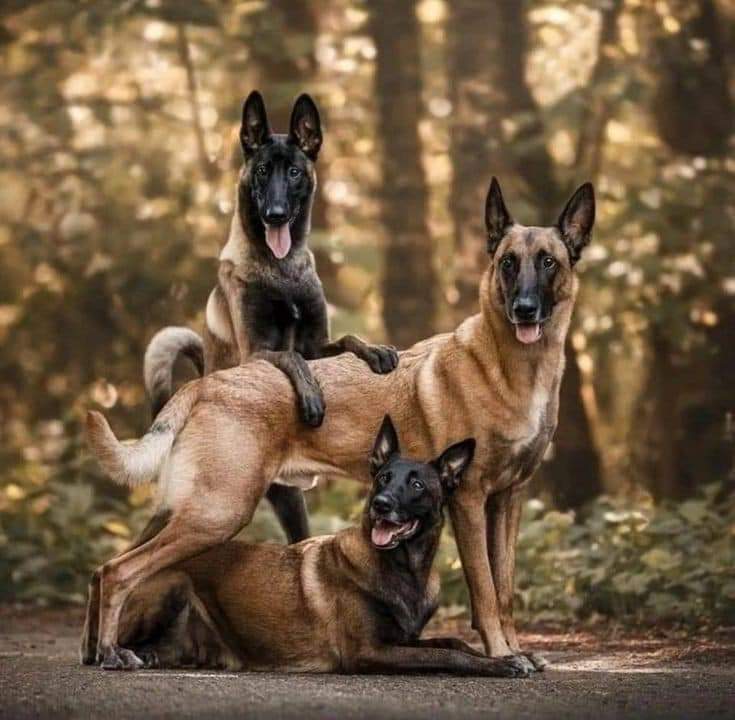
The Malinois presents as a medium-sized, squarely built dog with an elegant but robustly athletic silhouette. Their short, weather-resistant double coat — typically fawn to rich mahogany with a distinctive black mask and ears — is one of the easiest identifiers separating them from the similar-looking German Shepherd. The coat itself is relatively low-maintenance but sheds year-round.
| Characteristic | Male | Female |
|---|---|---|
| Height at Shoulder | 24–26 inches | 22–24 inches |
| Weight | 55–75 lbs | 40–60 lbs |
| Coat Type | Short, straight, hard, weather-resistant; dense undercoat | |
| Coat Color | Fawn to mahogany with black tips; black mask and ears | |
| Eye Color | Dark brown; alert and intelligent expression | |
| Build | Square, elegant, robustly muscled | |
| Lifespan | 12–14 years | |
One defining physical quality is the breed’s almost perpetual motion. The Malinois is, as the AKC breed standard describes it, “an enthusiastic and quick dog with a natural tendency to be in motion” — a trait visible even in puppies and one that should factor heavily into housing decisions. Already picturing your future dog? Browse our list of Belgian Malinois puppy names for inspiration.
03 — TemperamentPersonality & Temperament
Understanding the Belgian Malinois temperament is non-negotiable before ownership. The breed is defined by four core traits that interact in complex ways:
1. Exceptional Intelligence
The 2022 University of Helsinki study, published in Nature Scientific Reports, assessed Malinois against Border Collies, Hovawarts, English Cocker Spaniels, and nine other high-intelligence breeds. The Malinois excelled particularly in logical problem-solving, reading human gestures, and independent decision-making — the last quality being crucial for police and military work where a dog must act without handler input. This level of intelligence means they become bored quickly and will invent their own activities — often destructive ones — when understimulated.
2. Extreme Drive & Energy
The Malinois operates at an intensity level most owners underestimate before ownership and struggle to manage after it. They require a minimum of 2 hours of vigorous exercise daily — not a casual walk, but running, agility work, or structured training. Without this outlet, they develop anxiety, destructiveness, and compulsive behaviors. This is not a dog that adapts to a sedentary lifestyle.
3. Deep Loyalty & Protectiveness
Malinois form powerful bonds with their primary handler and family. They are natural guardians with strong territorial instincts, making them excellent watchdogs. However, this protectiveness requires early, thorough socialization — a Malinois that is not properly socialized from puppyhood can become reactive and difficult to manage around strangers or other animals. That deep attachment also means they are highly susceptible to separation anxiety if left alone for long periods without proper conditioning. Building the right relationship from day one is explored in depth in our guide to play, engagement, and communication with your Malinois.
4. Work Drive
Unlike many breeds that can be satisfied with casual activity, the Malinois has an innate need for purposeful work. They thrive with structured roles: police K9, agility competitor, search-and-rescue worker, or serious sport dog. Owners who provide this purpose report deeply rewarding partnerships. Those who don’t often describe ownership as relentlessly exhausting. The first step for any new owner is mastering the fundamentals — our basic obedience course for high-drive dogs is designed exactly for this breed’s intensity level. Equally important is teaching impulse control and calmness — without it, all that drive works against you.
“Belgian Malinois are known as Malligators for a reason — their bite work is impressive and ideal for police work. Their ability to keep a clear head under pressure sets them apart from nearly every other breed.”
— Teagan Coleman, Dog Trainer & Animal Behaviorist, NLR Training
04 — TrainingTraining & Exercise Requirements
Training a Belgian Malinois is a commitment that begins at 8 weeks and never fully ends. The good news: they learn faster than almost any other breed. The challenge: they require consistent, sophisticated training from a confident, knowledgeable handler. Inconsistency or amateurish technique produces a powerful, willful dog that quickly learns to manage its owner rather than the reverse.
| Requirement | Details |
|---|---|
| Daily Exercise | Minimum 2+ hours of vigorous activity — running, agility, fetch, structured play |
| Mental Stimulation | Puzzle feeders, scent work, obedience sessions, interactive games — daily |
| Training Method | Positive reinforcement; consistent rules; firm but never harsh corrections |
| Socialization Start | As early as 8 weeks — expose to diverse people, animals, environments |
| Ideal Activities | Agility, IPO/Schutzhund, obedience trials, flyball, treibball, herding, dock diving, nosework |
| Professional Help | Strongly recommended — ideally a trainer with Malinois or working-dog experience |
The Malinois displays herding behavior instinctively — chasing, circling, and nipping at heels — which makes them inappropriate for households with very young children who run unpredictably. They are not inherently aggressive, but their instincts and energy require expert management to prevent problematic behaviors from developing. For owners dealing with reactivity on walks, see our dedicated guide to managing leash reactivity and aggression. As skills progress, the natural next step is working toward advanced obedience and off-leash reliability — the gold standard for a Malinois owner.
For sport-focused owners, the Malinois excels in advanced agility and obstacle course training, scent work and nose games for mental stimulation, and — for those interested in formal protection sports — an introduction to protection sports with proper foundation work.
Key Training Principle
The Belgian Malinois does not need protection training added artificially — their protective instincts are innate. Unless you are training specifically in a protection sport such as Schutzhund or Ring Sport, focus exclusively on obedience, socialization, and mental enrichment.
05 — HealthHealth Issues & Lifespan
Belgian Malinois are generally a robust and healthy breed, benefiting from the genetic diversity of a working-dog lineage. Their typical lifespan of 12 to 14 years is strong for a medium-to-large breed. That said, prospective owners should be aware of the following heritable conditions:
| Condition | Description & Management |
|---|---|
| Hip Dysplasia | Malformed hip joint causing pain and reduced mobility. Screen breeding stock; maintain lean body weight; avoid high-impact exercise in puppies under 18 months. |
| Elbow Dysplasia | Developmental elbow abnormality leading to early arthritis. OFA certification of parents is a key indicator of responsible breeding. |
| Progressive Retinal Atrophy (PRA) | Hereditary eye condition causing gradual vision loss and potential blindness. DNA testing can identify carriers. |
| Epilepsy | Seizure disorder that can be managed with medication but requires ongoing veterinary monitoring. |
| Exocrine Pancreatic Insufficiency (EPI) | Inability to produce sufficient digestive enzymes; managed with dietary supplementation. |
| Thyroid Issues | Hypothyroidism can affect energy and weight; identifiable through blood panel screening. |
When selecting a puppy, always request that the breeder provide OFA (Orthopedic Foundation for Animals) certifications for hips, elbows, eyes, and heart for both parents. Reputable breeders welcome this transparency. Those who cannot or will not provide health clearances should be avoided.
06 — GroomingGrooming & Daily Care
The Malinois is a relatively low-maintenance dog from a grooming perspective. Their short double coat sheds consistently year-round, with heavier seasonal blowouts in spring and autumn. A weekly brushing with a slicker brush or undercoat rake controls the majority of loose hair. Baths are only necessary when the dog is genuinely dirty — overbathing strips the natural oils that keep the coat weather-resistant.
Beyond coat care, maintain the following routine:
| Task | Frequency |
|---|---|
| Brushing | Once weekly; twice weekly during shedding seasons |
| Bathing | Only when dirty — typically every 6–8 weeks |
| Nail Trimming | Every 3–4 weeks, or when audible on hard floors |
| Ear Cleaning | Weekly inspection; clean when debris is visible |
| Dental Care | Brush 3–4 times per week; professional cleaning annually |
| Vet Check-ups | Annual wellness exam; semi-annual recommended for senior dogs (8+) |
Nutrition is just as important as grooming for overall coat and body condition. For a comprehensive breakdown of what to feed a high-activity Malinois at every life stage, see our Belgian Malinois dog food guide.
07 — OwnershipIs a Belgian Malinois Right for You?
This is the most important section in the guide. The Belgian Malinois ends up in rescue or relinquishment far more often than its popularity might suggest — primarily because buyers underestimate what ownership actually requires. Be honest with yourself before proceeding.
Good Fit For
- Active individuals or families with 2+ hours daily for exercise and training
- Experienced dog owners with solid training knowledge
- Those seeking a working dog or sport competition partner
- People in rural, suburban, or city settings — read our urban Malinois guide if you live in a city
- Competitive handlers in agility, obedience, or protection sports
- Those who genuinely enjoy the training process as a lifestyle
- Owners willing to invest in professional training support
Not Recommended For
- First-time dog owners without prior training experience
- Sedentary or low-activity households
- Apartment dwellers without regular access to open space
- Families with very young toddlers (herding instincts pose a risk)
- Those with limited time for consistent daily training
- People seeking a calm, low-maintenance companion
- Those unable to cover professional training and veterinary costs
Honest Assessment
The Belgian Malinois is not a dog that adapts to its owner’s lifestyle — it requires its owner to adapt to its needs. If you cannot commit 2+ hours daily to vigorous, structured activity plus ongoing training, this breed will be miserable, and so will you. Consider a Labrador Retriever, Golden Retriever, or Standard Poodle as highly intelligent, lower-intensity alternatives.
08 — CostsFull Cost Breakdown
Owning a Malinois is a significant financial commitment. Beyond the purchase price, plan for higher-than-average training, veterinary, and enrichment costs driven by the breed’s activity level and health screening needs.
First-year total cost of ownership (excluding the purchase price) typically ranges from $3,500 to $10,000+. Budget accordingly, and strongly consider pet insurance given the breed’s susceptibility to hip dysplasia and other heritable conditions. To reduce food costs without sacrificing quality, read our complete Malinois feeding guide — the right diet for an athlete-level dog makes a measurable difference in long-term health costs.
09 — ComparisonBelgian Malinois vs German Shepherd
This is one of the most searched comparisons in the dog world — and for good reason. The breeds look similar and share a working-dog heritage, but differ in meaningful ways.
| Trait | Belgian Malinois | German Shepherd |
|---|---|---|
| Size | Medium (40–80 lbs) | Medium-Large (50–90 lbs) |
| Energy Level | Extremely high | High |
| Drive Intensity | Very intense; relentless | High; more adaptable |
| Trainability | Exceptional; needs expert handler | Excellent; more forgiving |
| Family Suitability | Limited; requires experience | More family-friendly |
| Health | Generally robust; fewer joint issues | Higher rate of hip dysplasia |
| Coat Maintenance | Lower — short, easy coat | Higher — longer, heavier shedder |
| Military/Police Use | Now preferred globally | Historically dominant |
| Best For | Working/sport experts | Active families; versatile work |
The consensus in professional working-dog circles has shifted: for demanding operational roles, the Malinois is now preferred due to its lighter build (allowing faster movement and easier transport in vehicles and aircraft), higher drive, and comparable intelligence. For family households, the German Shepherd’s slightly lower intensity and greater adaptability often makes it the better choice.
10 — FAQFrequently Asked Questions
According to a 2022 University of Helsinki study published in Nature Scientific Reports, yes. The Malinois ranked first across 10 standardized cognitive tests involving over 1,000 dogs from 13 breeds. It outperformed the Border Collie — long considered the gold standard — particularly in problem-solving, gesture recognition, and independent decision-making.
Technically possible if the dog receives 2+ hours of vigorous daily outdoor exercise — but generally inadvisable. A Malinois without adequate space and stimulation will develop destructive behaviors and anxiety. A house with a securely fenced yard, or immediate access to open running space, is strongly preferred.
With proper socialization and an experienced owner, Malinois can coexist with older children (8+) who understand how to interact with a high-drive working dog. They are generally not recommended for families with toddlers or young children, as their herding instincts lead them to chase, circle, and nip at small, unpredictably moving targets. Their intensity can be overwhelming and potentially dangerous for young children.
A puppy from a reputable breeder with health-tested parents typically costs $500–$3,000 depending on lineage and region. Professionally trained working dogs for police, protection sports, or search-and-rescue range from $3,000 to $15,000 or more. First-year ongoing costs (training, food, vet, supplies) typically add $3,500–$10,000 on top of the purchase price.
While they look similar, Malinois are lighter, faster, higher-drive, and generally more intense than German Shepherds. They have shorter, easier-care coats and are now the preferred breed in U.S. military and police units. German Shepherds are more adaptable and forgiving, making them better suited to active family households. The Malinois requires a more experienced, dedicated handler.
The Belgian Malinois typically lives 12 to 14 years — above average for a breed of its size. Maintaining a lean body weight, avoiding high-impact exercise during the growth phase (under 18 months), and scheduling regular veterinary screenings are the most impactful factors in maximizing a healthy lifespan.
Final WordConclusion
The Belgian Malinois is not simply a dog — it is a full lifestyle commitment. In the right hands, with experienced training, consistent exercise, and a purposeful role, a Malinois is an extraordinary companion: fiercely loyal, breathtakingly capable, and deeply bonded to its handler. In the wrong hands, it is one of the most difficult animals to manage responsibly.
If you have the experience, time, energy, and genuine enthusiasm for the challenge, few breeds will reward you as profoundly. If any of those elements are uncertain, a calmer, more adaptable breed will serve you — and any dog — far better. Ready to go further? Start with our complete Belgian Malinois owner’s guide or jump straight into advanced obedience and off-leash reliability training.
Go DeeperRelated Guides & Training Resources
Training
Basic Obedience for the High-Drive Dog
Training
Advanced Obedience & Off-Leash Reliability
Sport
Advanced Agility & Obstacle Course Training
Sport
Introduction to Protection Sports
Behavior
Managing Leash Reactivity & Aggression
Behavior
Separation Anxiety Solutions for the Malinois
Behavior
Taming the Beast: Impulse Control & Calmness
Enrichment
Scent Work & Nose Games for Mental Stimulation
Relationship
Building a Stronger Bond: Play, Engagement & Communication
Health
Nutrition & Conditioning for the Canine Athlete
Puppy
Puppy Socialization, Crate Training & Bite Inhibition
Lifestyle
The Urban Malinois: Thriving in a City Environment
Buying
Choosing the Best Belgian Malinois Breeder
Breeds
Belgian Malinois Mix: The Ultimate Guide
Fun
Belgian Malinois Puppy Names: The Perfect Fit
Behavior
Owner’s Guide: Teaching Impulse Control & Calmness